
 EN
EN
 AR
AR
 BG
BG
 FR
FR
 DE
DE
 HI
HI
 IT
IT
 JA
JA
 KO
KO
 PL
PL
 PT
PT
 RU
RU
 ES
ES
 SV
SV
 TL
TL
 ID
ID
 LV
LV
 LT
LT
 SR
SR
 UK
UK
 VI
VI
 TH
TH
 TR
TR
 FA
FA
 AF
AF
 HY
HY
 AZ
AZ
 KA
KA
 BN
BN
 LA
LA
 MN
MN
 SO
SO
 MY
MY
 KK
KK
 UZ
UZ
 KU
KU
 KY
KY
In today's rapidly evolving automotive landscape, vehicle security has become a paramount concern for drivers, fleet operators, and security professionals alike. Among the various technological advancements designed to enhance safety and security, run-flat tires have emerged as a critical component that can significantly improve vehicle performance during emergency situations. These specialized tires are engineered to maintain functionality even after punctures or air loss, providing drivers with the ability to continue operating their vehicles when conventional tires would fail catastrophically.
The importance of run-flat tires extends far beyond mere convenience, particularly in high-risk environments where vehicle mobility can mean the difference between safety and danger. Law enforcement agencies, military personnel, and security contractors have increasingly adopted these advanced tire systems to ensure operational continuity during critical missions. Understanding how run-flat tires function and their specific security benefits is essential for making informed decisions about vehicle safety upgrades.
Understanding Run-Flat Tire Technology
Self-Supporting Tire Systems
Self-supporting run-flat tires represent the most common type of run-flat technology currently available in the market. These tires feature reinforced sidewall construction that can support the vehicle's weight even when air pressure is completely lost. The enhanced sidewall structure typically incorporates additional rubber compounds and reinforcement materials that maintain tire shape and provide adequate load-bearing capacity during deflated conditions.
The engineering behind self-supporting run-flat tires involves creating a balance between flexibility for normal driving comfort and rigidity for emergency operation. Manufacturers achieve this balance through sophisticated rubber compounds and internal construction techniques that allow the tire to function effectively in both inflated and deflated states. This dual-purpose design ensures that drivers experience minimal performance degradation during normal operation while maintaining emergency mobility capabilities.
Advanced self-supporting run-flat tires can typically operate for 50 to 100 miles at speeds up to 50 mph after complete air loss, depending on the specific tire design and vehicle load. This extended operational range provides sufficient distance for drivers to reach safety, complete critical missions, or access repair facilities without requiring immediate tire changes in potentially dangerous locations.
Support Ring Technology
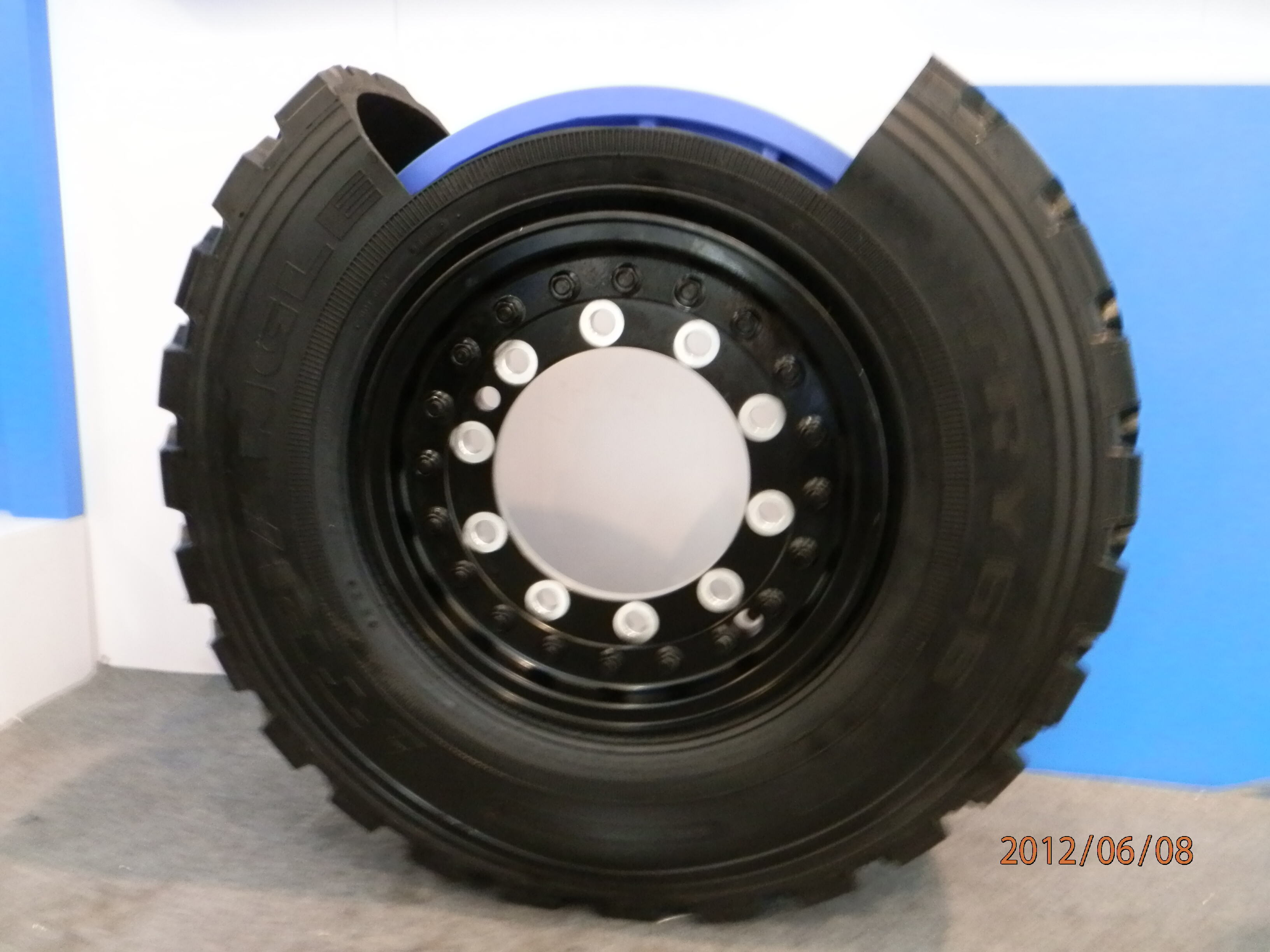
Support ring run-flat tires utilize a different approach by incorporating a solid ring or insert that sits inside the tire and wheel assembly. When air pressure is lost, this support ring bears the vehicle's weight and maintains tire shape, allowing continued operation. The support ring system offers several advantages, including the ability to use conventional tire designs while adding run-flat capability through the internal support mechanism.
This technology is particularly valuable for vehicles that require maximum run-flat performance, such as armored vehicles or high-security transportation applications. The support ring can be designed to handle extreme loads and provide extended operational distances, often exceeding the capabilities of self-supporting systems. Additionally, support ring technology allows for easier tire replacement, as conventional tires can be mounted over the permanent support ring assembly.
The modular nature of support ring systems also enables customization for specific vehicle applications and security requirements. Different ring materials and designs can be selected based on factors such as vehicle weight, expected threat levels, and operational environment conditions.
Critical Security Advantages in Emergency Situations
Mobility Under Attack
One of the most significant security benefits of run-flat tires is their ability to maintain vehicle mobility when under hostile fire or attack. In conflict zones or high-threat environments, tire punctures from gunfire, shrapnel, or improvised explosive devices can immobilize conventional vehicles, leaving occupants vulnerable to further attack. Run-flat tires eliminate this vulnerability by ensuring continued mobility even after tire damage.
Military and security personnel operating in hostile environments particularly benefit from this capability, as it allows tactical vehicles to continue mission operations or execute emergency evacuations even after sustaining tire damage. The psychological advantage of knowing that tire punctures will not result in immediate immobilization can significantly improve operational confidence and decision-making under stress.
Beyond military applications, civilian security personnel, diplomatic convoys, and executive protection details rely on run-flat tires to maintain mobility during potential attacks or ambush situations. The ability to continue driving after tire damage can be the critical factor that determines successful escape from dangerous situations.
Elimination of Roadside Vulnerability
Traditional tire failures often force drivers to stop in potentially dangerous locations for tire changes or repairs. These roadside stops create significant security vulnerabilities, particularly on highways, in remote areas, or in regions with high crime rates. Run-flat tires eliminate the immediate need for roadside stops, allowing drivers to continue to safer locations before addressing tire issues.
The security implications of avoiding roadside stops extend beyond personal safety concerns. Commercial vehicles carrying valuable cargo, cash transport services, and government officials benefit significantly from the ability to avoid unscheduled stops in unsecured areas. Run-flat tires provide the operational flexibility to maintain schedules and security protocols even when tire damage occurs.
Law enforcement agencies have documented numerous cases where the ability to continue driving after tire damage prevented potential carjacking attempts, robberies, or other criminal activities that often target vehicles disabled on roadsides. The deterrent effect of run-flat tires extends beyond their technical capabilities to influence criminal behavior patterns.
Operational Benefits for Professional Applications
Fleet Security Enhancement
Commercial and government fleets face unique security challenges related to vehicle downtime, route predictability, and asset protection. Run-flat tires significantly enhance fleet security by reducing the frequency of unscheduled stops and maintaining operational schedules even when individual vehicles experience tire problems. This consistency helps prevent the development of predictable patterns that could be exploited by criminal organizations.
Fleet managers report substantial improvements in overall security posture when run-flat tires are implemented across their vehicle inventory. The reduction in roadside assistance calls and emergency tire changes directly translates to fewer opportunities for criminal targeting and reduced exposure to theft or hijacking attempts during vulnerable service situations.
The financial security benefits of run-flat tires for fleet operations include reduced insurance claims, decreased cargo loss, and improved driver safety ratings. These factors combine to create compelling economic arguments for run-flat tire adoption beyond the immediate security advantages.
Mission-Critical Reliability
Emergency response vehicles, including ambulances, fire trucks, and police units, require absolute reliability to fulfill their critical public safety missions. Run-flat tires ensure that these vehicles can continue responding to emergencies even after tire damage, potentially saving lives by maintaining response capabilities during critical situations.
The reliability factor extends to private security operations, where run-flat tires enable security patrols to maintain coverage areas and response capabilities despite tire failures. This continuous operational capability is essential for maintaining security perimeters and ensuring rapid response to security incidents.
Emergency management agencies have incorporated run-flat tires into disaster response protocols, recognizing that vehicle mobility during disasters can be compromised by debris-induced tire damage. Run-flat tires ensure that evacuation vehicles and emergency supply transports can navigate disaster-affected areas safely and effectively.
Technical Performance in Security Applications
Load-Bearing Capabilities
Professional security applications often involve vehicles carrying significant additional weight from armor plating, specialized equipment, or cargo loads. Run-flat tires designed for these applications must demonstrate superior load-bearing capabilities while maintaining run-flat performance characteristics. Modern run-flat tires can support loads equivalent to or exceeding conventional tire specifications, ensuring compatibility with security vehicle requirements.
The load distribution characteristics of run-flat tires under deflated conditions require careful engineering to prevent vehicle handling degradation that could compromise security operations. Advanced run-flat designs incorporate load distribution features that maintain predictable vehicle dynamics even under extreme loading conditions combined with tire deflation.
Testing protocols for security-grade run-flat tires include extreme load scenarios that simulate real-world security vehicle operations. These tests verify that run-flat tires can maintain structural integrity and performance characteristics under the demanding conditions typical of security applications.
Durability and Longevity
Security vehicles often operate in harsh environments with increased exposure to puncture hazards, extreme temperatures, and challenging terrain conditions. Run-flat tires must demonstrate exceptional durability to justify their higher initial cost and provide reliable performance throughout their service life. Advanced rubber compounds and construction techniques used in run-flat tires often result in improved overall tire longevity compared to conventional alternatives.
The puncture resistance characteristics of run-flat tires provide additional security benefits by reducing the likelihood of tire damage from common road hazards. Enhanced sidewall construction and specialized tread compounds improve resistance to cuts, punctures, and impact damage that could compromise vehicle security in critical situations.
Maintenance requirements for run-flat tires in security applications focus on regular pressure monitoring and inspection protocols that ensure optimal performance when emergency capabilities are needed. Professional security operations typically implement enhanced tire maintenance programs that maximize the reliability and longevity of their run-flat tire investments.
Integration with Vehicle Security Systems
Tire Pressure Monitoring Systems
Modern run-flat tires integrate seamlessly with advanced tire pressure monitoring systems that provide real-time information about tire status and performance. These integrated systems enable security vehicle operators to make informed decisions about operational capabilities and maintenance requirements while maintaining situational awareness of tire conditions during critical operations.
The combination of run-flat tires with sophisticated monitoring systems creates a comprehensive tire security platform that alerts operators to potential issues while maintaining operational capability. This integration is particularly valuable for security applications where tire status information can influence tactical decisions and operational planning.
Advanced monitoring systems can differentiate between normal pressure variations and actual tire damage, providing security personnel with accurate information for assessing threat levels and planning appropriate responses. This capability enhances overall security effectiveness by eliminating uncertainty about vehicle mobility status during critical situations.
Compatibility with Armored Vehicles
Armored security vehicles present unique challenges for tire selection due to increased weight, altered weight distribution, and enhanced protection requirements. Run-flat tires designed for armored vehicle applications must accommodate these special requirements while maintaining run-flat performance characteristics under extreme conditions.
The integration of run-flat tires with armored vehicle systems requires careful consideration of factors such as wheel well clearance, suspension modifications, and overall vehicle dynamics. Properly specified run-flat tires can significantly enhance the security profile of armored vehicles by ensuring mobility even after tire attacks or damage from explosive devices.
Testing protocols for armored vehicle run-flat tires include ballistic resistance evaluations and blast simulation tests that verify performance under conditions typical of high-threat security environments. These specialized testing procedures ensure that run-flat tires can maintain their protective capabilities when integrated with comprehensive vehicle security systems.
Implementation Considerations for Security Applications
Training and Operational Procedures
Successful implementation of run-flat tires in security applications requires comprehensive training programs that educate operators about proper use, limitations, and maintenance requirements. Security personnel must understand how to recognize tire damage, assess remaining operational capability, and make appropriate tactical decisions based on tire status information.
Operational procedures for security vehicles equipped with run-flat tires must account for the extended mobility capabilities while establishing guidelines for safe operation under damaged tire conditions. These procedures typically include speed limitations, distance restrictions, and protocols for transitioning from run-flat operation to normal tire replacement.
Training programs for security personnel emphasize the importance of maintaining situational awareness regarding tire status and understanding the tactical advantages provided by run-flat capability. This knowledge enables more effective decision-making during security operations and emergency situations.
Cost-Benefit Analysis
The implementation of run-flat tires in security applications requires careful cost-benefit analysis that considers both direct and indirect financial impacts. While run-flat tires typically involve higher initial purchase costs compared to conventional tires, the security and operational benefits often justify this investment for professional security applications.
Direct cost benefits include reduced downtime, decreased emergency service requirements, and improved operational efficiency. Indirect benefits encompass enhanced personnel safety, improved mission success rates, and reduced insurance and liability costs associated with security incidents involving immobilized vehicles.
Long-term cost analysis for security fleet operations demonstrates that run-flat tires often provide positive return on investment through reduced total cost of ownership and improved operational capabilities. These financial benefits support the business case for run-flat tire adoption in professional security applications.
FAQ
What is the maximum distance run-flat tires can travel after air loss?
Most run-flat tires can operate for 50 to 100 miles after complete air pressure loss, depending on the specific tire design, vehicle load, and driving conditions. Security-grade run-flat tires may offer extended range capabilities designed for tactical applications. Speed should be limited to 50 mph or less during run-flat operation to prevent tire damage and maintain vehicle control. The actual distance capability varies based on factors such as ambient temperature, road surface conditions, and vehicle weight distribution.
How do run-flat tires perform in extreme weather conditions?
Run-flat tires are engineered to maintain performance characteristics across a wide range of weather conditions, including extreme heat and cold environments typical of security operations. The specialized rubber compounds used in run-flat construction provide improved temperature stability compared to many conventional tires. However, extreme temperatures can affect run-flat distance capabilities and may require operational adjustments. Security applications in harsh climates should consider temperature-specific run-flat tire designs optimized for local environmental conditions.
Are run-flat tires more puncture-resistant than conventional tires?
Run-flat tires typically offer improved puncture resistance due to their reinforced construction and enhanced sidewall design. The additional materials and construction techniques used to provide run-flat capability often result in better resistance to common puncture hazards such as nails, screws, and road debris. While no tire is completely puncture-proof, run-flat tires provide both improved puncture resistance and continued mobility after puncture events, making them ideal for security applications where tire damage is a significant concern.
What maintenance requirements are specific to run-flat tires?
Run-flat tires require regular pressure monitoring and inspection protocols to ensure optimal performance when emergency capabilities are needed. Professional security operations should implement enhanced maintenance programs including monthly pressure checks, visual inspections for sidewall damage, and adherence to manufacturer rotation recommendations. Tire pressure monitoring systems should be regularly calibrated and tested to ensure accurate readings. After any run-flat operation, tires should be professionally inspected and typically replaced to maintain security readiness for future incidents.